CPG | Skincare
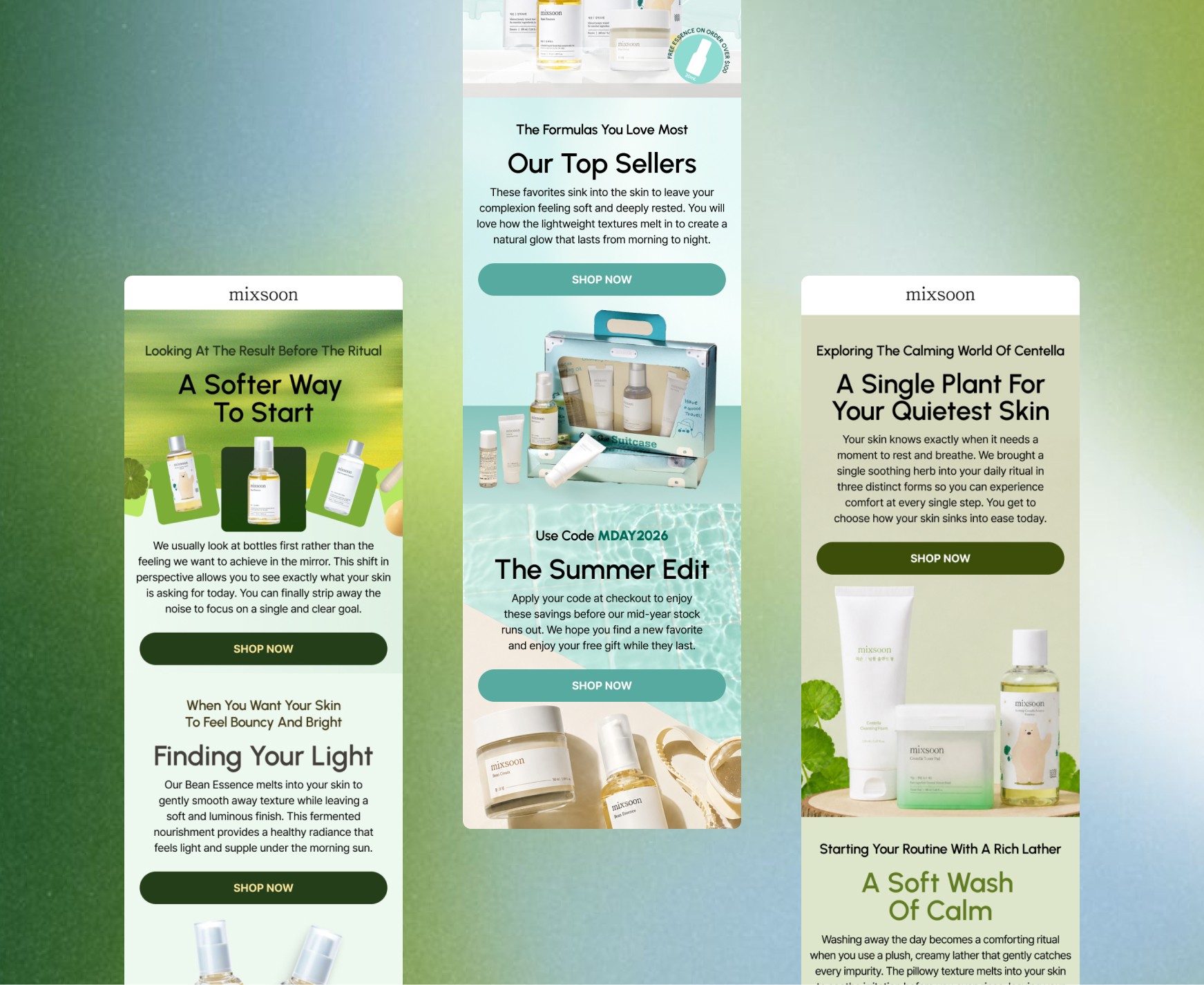
mixsoon is a high-growth Korean skincare brand centered on "skinimalism"—offering ultra-purified, single-ingredient formulas like their viral Bean Essence. After gaining massive online momentum, the brand is currently undergoing a major US retail expansion, scaling from a digital darling to a mass-market powerhouse by rolling out its minimalist products onto the physical shelves of approximately 500 Costco warehouse locations nationwide.
As the solo Content Designer collaborating with mixsoon through Retentics, you translated the brand's clean identity into high-converting email campaigns during this massive scaling phase. To solve the limitations of legacy e-commerce platforms that miss ready-to-restock past buyers, you paired your responsive, educational layouts with Retentics’ predictive AI replenishment models. By designing tailored flows that hit consumers at their precise moment of forecasted need, your strategic creative assets successfully turned predictive data into beautiful, trusted touchpoints that helped drive up to a 22.9x revenue multiple on automated flows.
Industry
CPG Beauty
Time
March 2026 - Present
My Role
Design
Tools
Figma
Photoshop
Illustrator
AI image generators
March & April Designs




After seeing the success of their viral products on their website, the brand decided to make a bigger impact by aggressively expanding into omnichannel platforms like Costco, Sephora, Ulta Beauty, Amazon, and Olive Young.
However, this massive retail saturation paradoxically triggered a severe direct-to-consumer (DTC) crisis by cannibalizing their primary digital storefront.
DTC Revenue Plunge: As products became readily available on third-party shelves, mixsoon witnessed an alarming downturn in website revenue, signaling that loyal online buyers were rapidly defecting to external retailers.
Diluted Customer Lifetime Value: This sudden shift threatened long-term customer retention, creating an urgent, business-critical mandate to aggressively reclaim and retain direct website buyers.
Legacy Marketing Blindspots: Compounding the drop, standard marketing tools failed because they rely strictly on reactive, recent-click triggers. This completely blinded the brand to a massive, "invisible" audience of past buyers who were ready to restock but hadn't recently visited the site, leaving mixsoon unable to intervene before they drifted away.
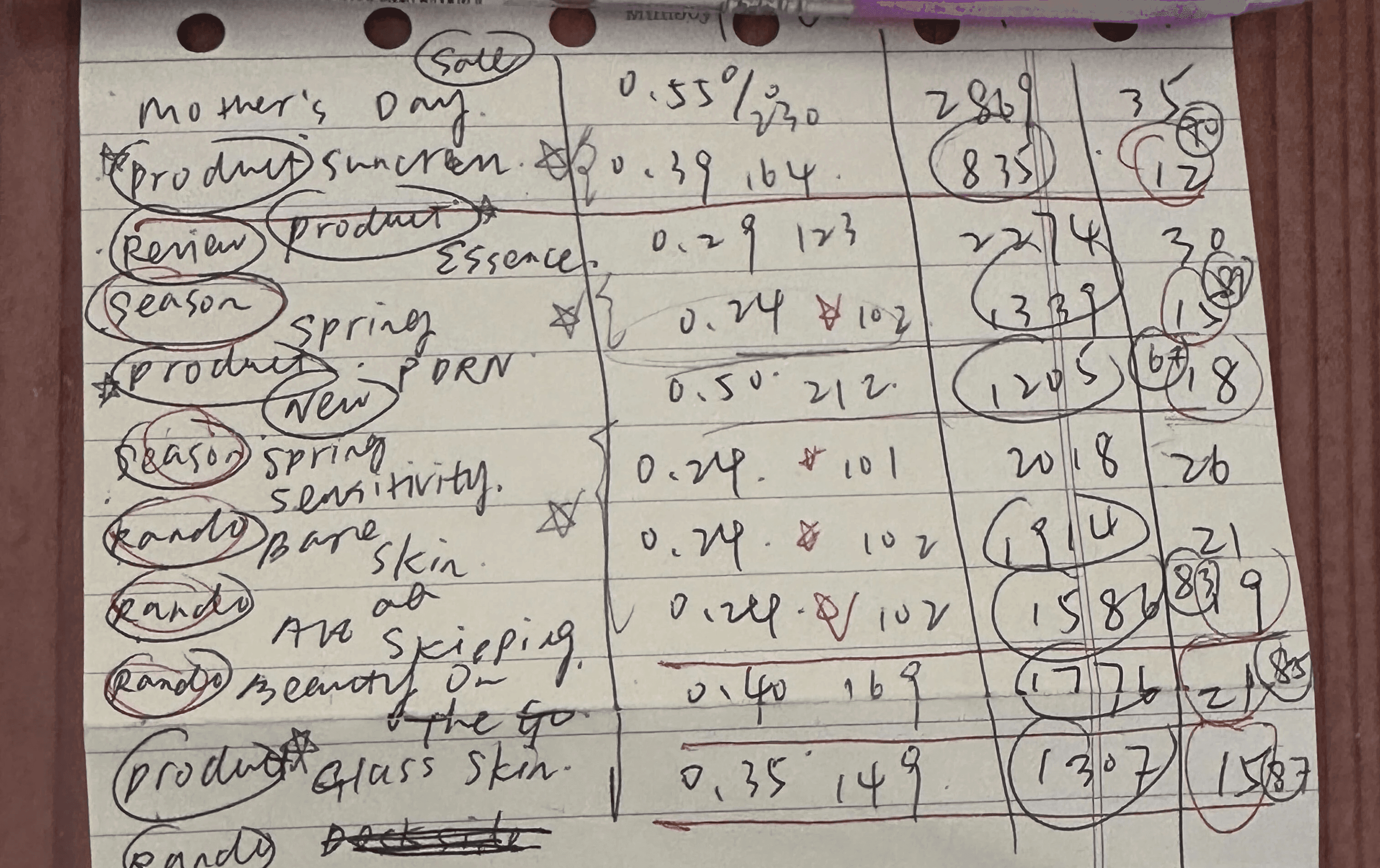
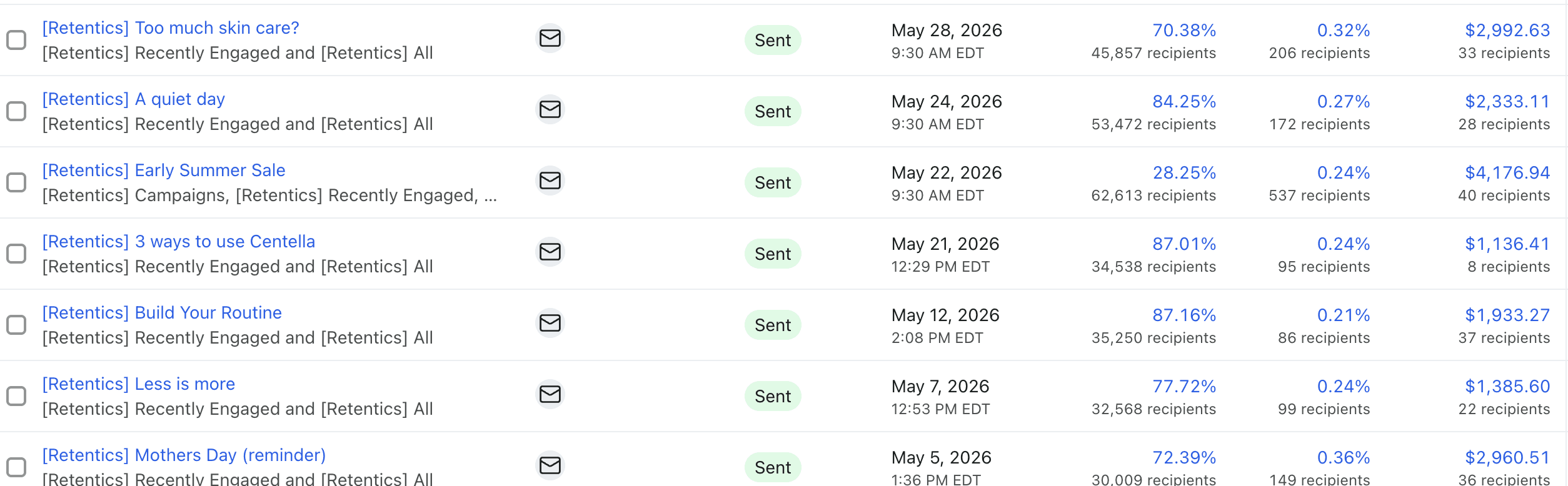
To diagnose the declining revenue, I cross-referenced individual campaign metrics with a visual audit of past email layouts.
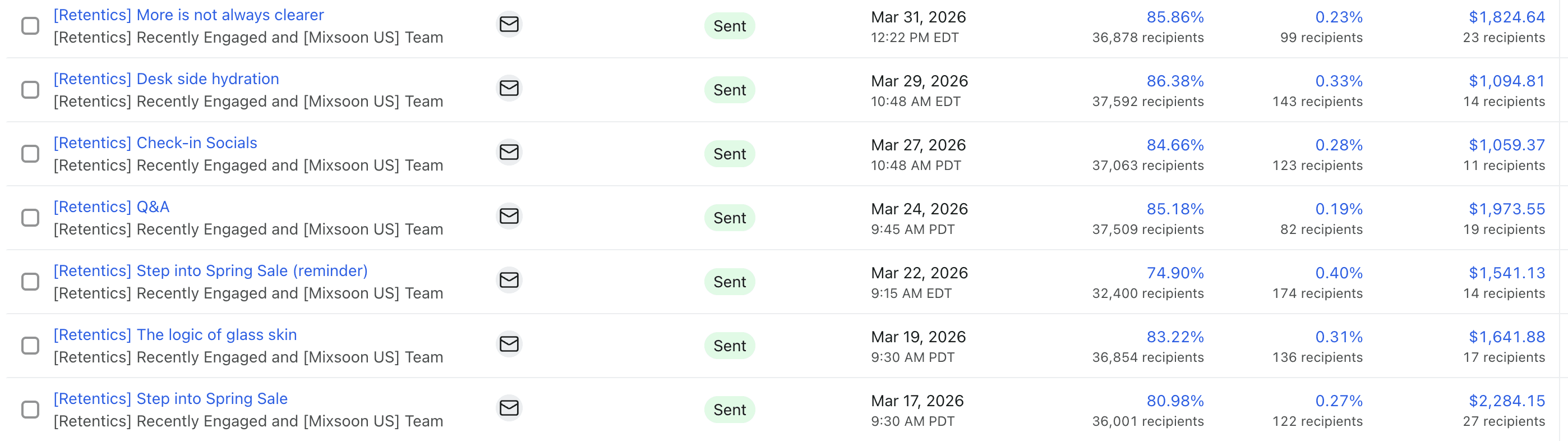
The Data Insight: Tracking click-through rates (CTR) revealed a stark performance gap. While structured seasonal and holiday campaigns maintained engagement, standard product-specific spotlights and review flows underperformed significantly.
The Root Cause (Visual Fatigue): Placing the designs side-by-side exposed the issue. Because mixsoon’s rigid "skinimalism" guidelines heavily favored a uniform, monochromatic light beige palette, the non-seasonal emails completely blended together.
The Dilemma: Revenue vs. Brand Equity
While tentpole promotional events like Black Friday or Early Summer sales predictably drive massive revenue spikes, frequent discounting risks diluting the brand’s premium positioning. To build sustainable, long-term growth without relying on a perpetual sale cycle, we shifted our focus to optimization levers completely within our control:
Optimizing Copy Length for Mobile-First Consumers: Because the modern DTC audience shops primarily on mobile, a competitive analysis revealed that concise text yields incrementally higher conversion rates than dense paragraphs. We replaced text-heavy benefit explanations with intuitive infographics and clear, scannable imagery.
Prioritizing Human Interaction Over Isolated Product Shots: Audience data demonstrates that consumers connect more deeply with real-world application. While standard product shots in tubes or jars look clean, featuring models interacting with the product better communicates texture, scale, and utility.
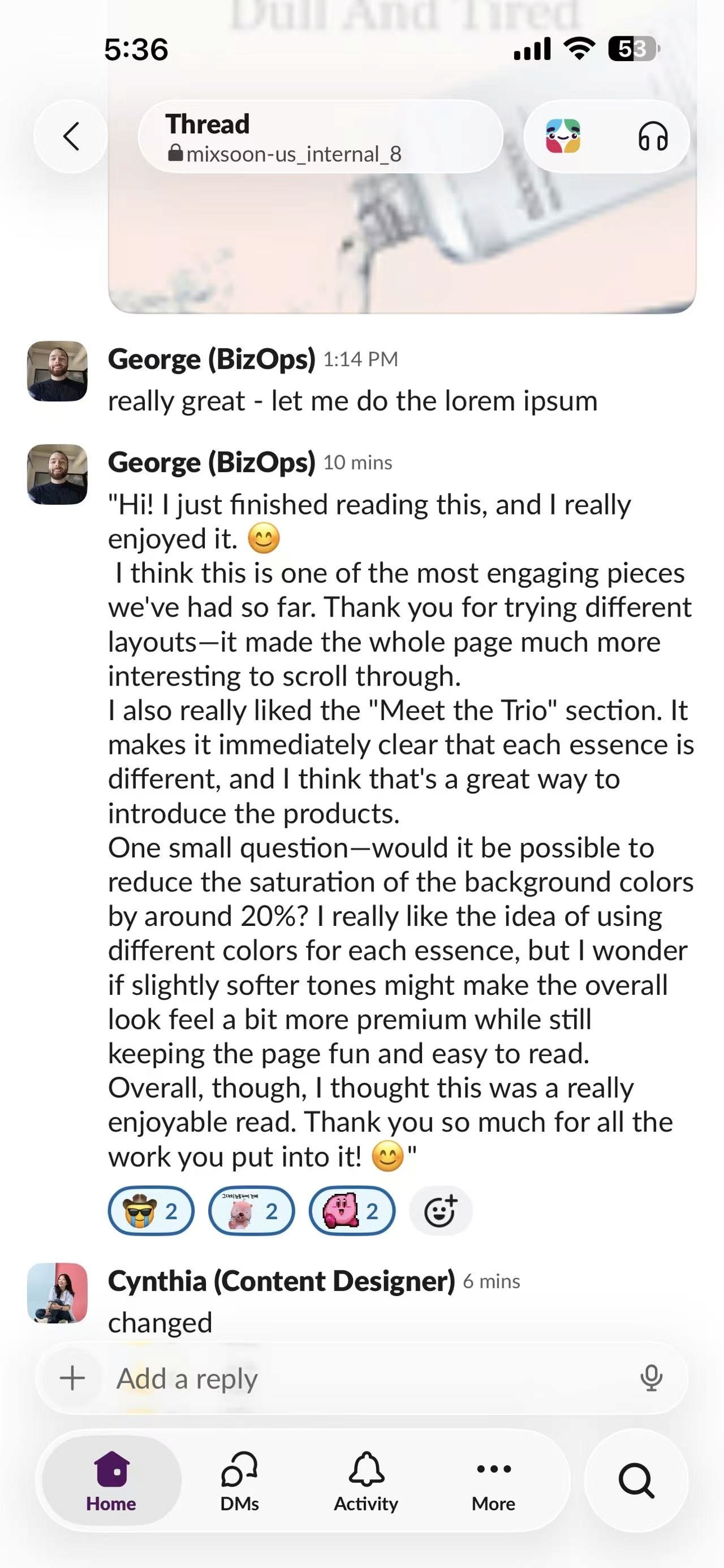
Combating Creative Fatigue through Structural Innovation: Because "80% of sales are driven by a core 20%" of the product catalog, subscribers are frequently exposed to the same products and rigid brand color palettes. Because static educational campaigns historically underperform, we broke out of visual fatigue by constantly varying layout hierarchies—disrupting the predictable
[Subheader → Header → CTA → Image]pattern to recapture consumer attention.
When campaigns are redesigned followed by the above bullet points, we see a significant increase comparing to the previous design.



Managing creative strategy across multiple beauty brands reveals a persistent industry gap: legacy e-commerce tools capture transactional demographics but fail to decode a customer's actual visual identity. To solve this, I am prototyping a feature that cross-references subscriber profiles with public Instagram and TikTok signals—analyzing likes, saves, and follows. This allows for the design of hyper-targeted email layouts that map perfectly to the precise aesthetic subcultures of each unique audience.
Integrating this capability directly into Retentics elevates the platform from a predictive data tool to an intelligent creative powerhouse. By unlocking these social-aesthetic insights, the SaaS product can automatically categorize subscriber design preferences and serve dynamically tailored layouts. This bridges the gap between predictive timing and visual personalization, maximizing click-through rates (CTR) and customer lifetime value (LTV) for omnichannel brands at scale.